
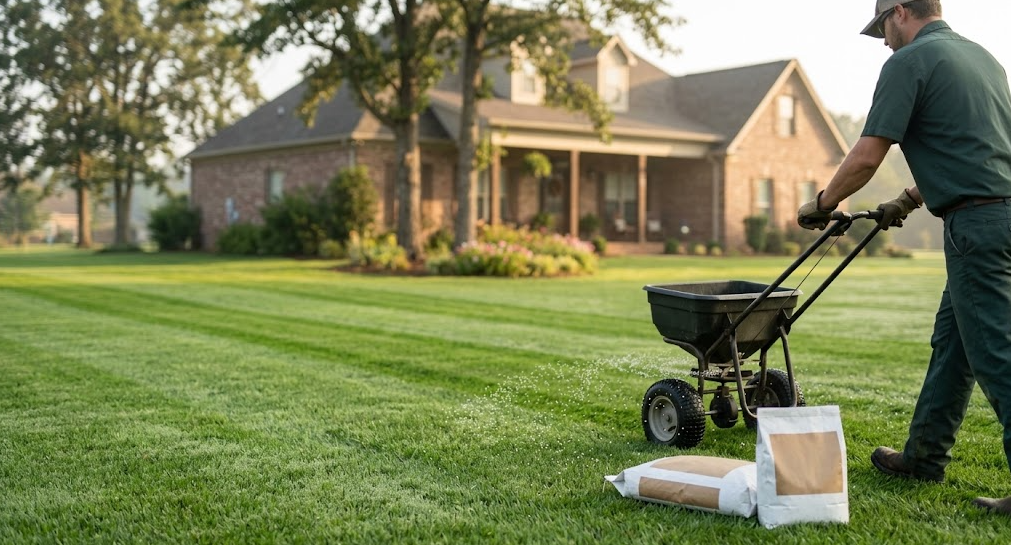
The best time to fertilize your lawn in Athens, Alabama depends on your grass type. Warm-season grass like Bermuda and zoysia gets fed from spring through summer. Cool-season grass like fescue gets its biggest meal in the fall. Get the timing right and your lawn grows thick and green. Get it wrong and you waste money, or even hurt the grass.
Lots of people feed their lawn whenever they remember. Others do it just because the garden store has a big sale. But grass is a lot like a person. It eats best when it is awake and hungry. Let’s find out when that is.
Why Timing Matters So Much
Fertilizer is food for your lawn. But grass only eats when it is actively growing.
Say you feed a sleeping lawn. The food just sits there. Rain may wash it away, and some of it can end up in nearby creeks and ponds. Now say you feed during a hot, dry spell. The grass is already stressed, and extra food can burn it.
Good timing means your grass gets the food right when it can use it.
Step One: Know Your Grass Type
Before you pick a date, look at your lawn. Which kind of grass do you have?
- Warm-season grass: Bermuda, zoysia, and centipede. It turns brown and goes to sleep in winter. It grows fast in the heat.
- Cool-season grass: Fescue is the most common one in North Alabama. It stays greener in winter. It grows best when the weather is mild.
Not sure which one you have? Many yards have a mix. A local lawn pro can tell you in a quick visit.
When to Fertilize Warm-Season Lawns in Athens, AL
Warm-season grass wakes up when the weather warms up and stays warm.
- Spring: Wait until the grass is fully green and growing. In our area, this is often around mid to late spring. Feeding too early can help weeds more than grass.
- Summer: Give another feeding or two while the grass is growing strong. Many lawns do well with a feeding every 6 to 8 weeks during the growing season.
- Late summer: Do one last light feeding. Then stop, so the grass can slow down naturally before winter.
Do not feed warm-season grass in late fall or winter. It is asleep, and it cannot use the food.
When to Fertilize Cool-Season Lawns in Athens, AL
Fescue has a different schedule. It likes cooler weather.
- Fall: This is the most important feeding of the year. Early to mid fall is a great time. The soil is still warm, the air is cooler, and roots grow deep.
- Late fall: A second feeding helps the lawn store energy for winter.
- Spring: A light feeding is fine in early spring. But go easy. Heavy feeding in spring can push too much top growth right before the summer heat.
Skip feeding fescue in the middle of summer. The heat stresses it, and extra food can make things worse.
A Simple Year-Round Look
Season | Warm-Season Grass | Cool-Season Grass |
Early spring | Wait | Light feeding |
Late spring | First feeding | Skip or very light |
Summer | Feed every 6 to 8 weeks | Skip |
Early fall | Last light feeding | Main feeding |
Late fall | No feeding | Second feeding |
Winter | No feeding | Usually none |
Weather changes every year, so treat this as a guide. Your own yard may need small changes.
Test Your Soil First
Here is something many people skip. Before you buy any fertilizer, check what your soil already has.
A soil test shows the pH and which nutrients are low. Maybe your lawn needs more of one thing and none of another. Without a test, you are just guessing, and guessing costs money.
Good fertilizer does very little if the soil pH is off. The test helps you fix that first.
Signs Your Lawn Is Hungry
Your grass will often tell you when it needs food. Watch for these signs:
- The color looks pale or yellowish
- Growth is slow, even in the right season
- The lawn looks thin in spots
- Weeds are taking over
- The grass seems weak after dry or hot weather
One or two of these signs do not always mean you need fertilizer. Water, shade, and pests can cause them too. That is another reason a lawn check helps.
Fertilizing Mistakes to Avoid
A few small mistakes cause most fertilizer problems:
- Feeding too early or too late in the season. The grass cannot use it.
- Using too much. More food is not better. Too much can burn the grass.
- Spreading unevenly. This leaves stripes of dark and light grass.
- Feeding right before heavy rain. The rain can wash the food away.
- Using the same product all year. Your lawn’s needs change by season.
- Skipping the soil test. You may feed what the lawn does not need.
Make Fertilizer Work Harder with Aeration
Hard, packed clay soil is common around Athens. When soil is that tight, fertilizer has a hard time getting down to the roots.
That is where core aeration helps. It opens small holes in the soil. Then the food, water, and air can reach the roots. Many homeowners aerate and then feed right after. The lawn gets the best of both.
DIY or Hire a Fertilizing Lawn Service in Athens, Alabama?
You can do it yourself. A spreader and a bag of fertilizer are easy to find. But there are a few things to think about:
- You have to pick the right product for your grass
- You need to know the right amount for your lawn size
- Timing matters, and weather can change the plan
- Uneven spreading leaves patchy results
A lawn fertilization service in Athens, AL takes care of this for you. A local pro knows the grass, the clay soil, and the weather here. They also set up a schedule so you never have to guess.
If you want a hand, Willow Leaf Lawn Care offers fertilization with treatments made to bring your lawn the nutrients it needs.
How to Pick a Good Fertilizing Lawn Service in Athens, Alabama
Searching for help can feel like a lot. Here is what to look for:
- Local experience. They should know North Alabama lawns.
- A plan by season. Good care changes through the year.
- Soil testing. The best companies check before they feed.
- Clear communication. You should know what is being put on your lawn and when.
- Honest reviews. Past customers can tell you a lot.
- Safe products and methods. Your kids and pets play on this grass.
Get Your Lawn on the Right Schedule
Good fertilizing is all about timing. Feed your warm-season grass in the heat of the growing season. Feed your fescue in the fall. Test your soil first, avoid the common mistakes, and your lawn will pay you back with thick, healthy grass.
Want a feeding plan made for your yard? Contact Willow Leaf Lawn Care today and get your lawn on the right schedule.