
Your lawn needs core dethatching when the layer of dead grass above the soil gets thicker than half an inch. The most common signs are a spongy feel, thin patches, water running off, a brown base, and bugs or disease that keep coming back. A core dethatching service in Madison, AL pulls out that dead layer so water, air, and food can reach the roots again.
Let’s go through the five signs one by one. By the end, you will know if your lawn needs help.
Quick Answer: The 5 Signs at a Glance
# | Sign | What You Notice |
1 | Spongy lawn | Soft, bouncy feel when you walk |
2 | Thin, patchy grass | Weak spots even with good care |
3 | Water runs off | Puddles or fast runoff after rain |
4 | Brown base | Green tips, brown stems below |
5 | Pests and disease | Problems keep coming back |
What Is Core Dethatching?
Thatch is a layer of old stems, roots, and dead grass that sits between the green blades and the soil. A thin layer is fine. A thick layer is trouble.
Core dethatching means removing that thick layer right down at the base of your grass, at the core of the lawn. A machine with blades or tines pulls the dead material up so it can be raked away. Your grass can then breathe, drink, and eat again.
Sign 1: Your Lawn Feels Spongy
What you see: You walk across the yard, and it feels soft and bouncy, like a thick carpet with a pad underneath.
Why it happens: That bounce is the thatch layer. It is packed with dead stems and roots. A healthy lawn feels firm, not squishy.
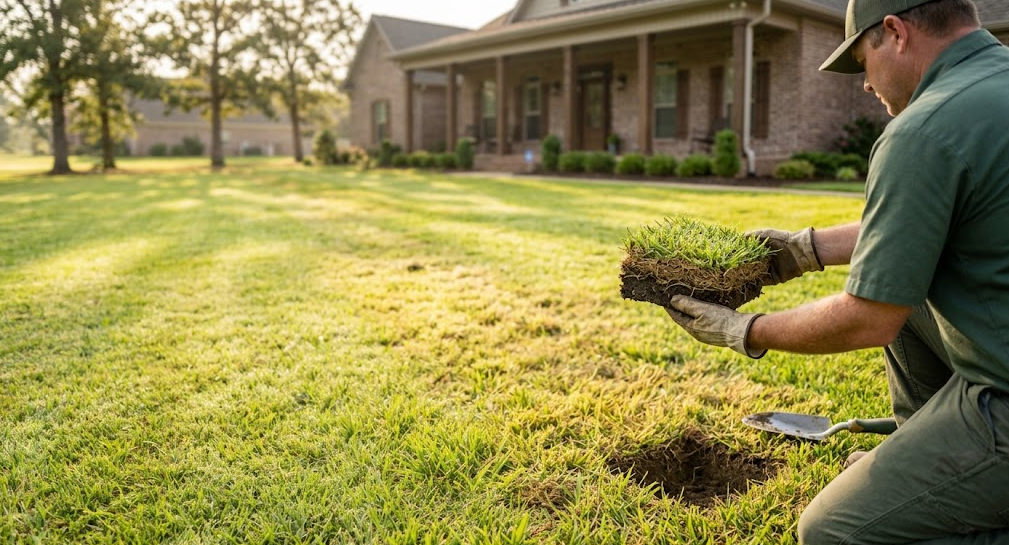
What to do: Check the layer. Dig out a small square of lawn, about the size of your hand, and look at the side. If the brown, stringy layer is thicker than half an inch, it is time to dethatch.
Sign 2: The Grass Looks Thin or Patchy
What you see: You water and feed your lawn, yet it still looks weak. You see thin spots, bare patches, or grass that never gets thick.
Why it happens: Thatch acts like a blanket on top of the soil. Seed, water, and fertilizer get stuck in it and never reach the ground. The roots stay hungry, even when you do everything right.
What to do: Do not just add more fertilizer. Too much food can build even more thatch. Remove the layer first, then feed the lawn. A custom fertilization plan works much better on a clean surface.
Sign 3: Water Runs Off or Pools on Top
What you see: After rain or watering, the water sits in puddles or rolls off the lawn. The soil underneath stays dry.
Why it happens: A thick thatch layer works like a doormat. Water slides across it instead of soaking in. This is a big problem in the heat of a North Alabama summer, when your lawn needs water the most.
What to do: Dethatch to open the surface. If the soil under the thatch is also hard clay, think about core aeration too. Dethatching cleans the top. Aeration opens the soil below. Together, they let water sink in deep.
Sign 4: The Base of Your Grass Is Brown
What you see: The tips of the grass look green, but when you part the blades, the bottom is brown and stringy.
Why it happens: That brown layer is the thatch. As it grows thicker, the grass starts rooting in it instead of in the soil. These shallow roots dry out fast and die in hot weather.
What to do: Remove the thatch so roots can grow down into the soil again. Deep roots mean a lawn that handles heat and dry days much better.
Sign 5: Bugs and Lawn Disease Keep Coming Back
What you see: You treat the lawn, and a few weeks later the same problems return. Maybe it is fungus, or maybe it is bugs.
Why it happens: A damp, thick thatch layer is a cozy home for pests and fungus. It stays warm and wet, and it hides them from sight. Sprays only reach the surface.
What to do: Remove their hiding place. A clean lawn base dries out faster and gives bugs and fungus fewer spots to live.
Why Madison Lawns Get Thatch
Madison sits in North Alabama. Our warm summers help grass grow fast. But fast growth also means more dead material piling up at the base.
Many yards here also sit on heavy clay soil. Tight, packed soil slows down the tiny helpers that break down thatch. So the layer keeps getting thicker.
A few other things can make it worse:
- Bermuda and zoysia grass build thatch more easily
- Too much fertilizer
- Light, frequent watering
- Long gaps between mowing
When Is the Best Time to Dethatch in Madison, AL?
Dethatch when your grass is growing fast. That way it heals quickly.
- Warm-season grass (Bermuda, zoysia, centipede): Late spring to early summer
- Cool-season grass (fescue): Early fall
Do not dethatch when the grass is asleep or stressed by drought. Dethatching a weak lawn can hurt it.
Myth vs. Fact
Myth: “Thatch comes from leaving grass clippings on the lawn.”
Fact: Clippings break down fast. Thatch comes mostly from dead stems and roots, not from mowing.
Myth: “Every lawn needs dethatching every year.”
Fact: Many lawns do not. Check the thatch layer first. If it is under half an inch, you can skip it.
Myth: “More fertilizer will fix a thin lawn.”
Fact: Too much fertilizer can build more thatch. Fix the layer first, then feed.
DIY or Professional Lawn Dethatching?
You can rent a dethatcher from a hardware store. But the machines are heavy. Going too deep can tear up healthy grass. Going too shallow does not fix the problem. And the cleanup is a big job.
A core dethatching service in Madison, AL brings the right machine and the know-how. A pro knows the right depth, the right timing, and what to do after.
The same goes for professional lawn dethatching in Athens, AL. Nearby North Alabama towns share the same clay soil and the same warm summers. So the same signs and the same care apply there too.
If you want help, Willow Leaf Lawn Care offers dethatching to remove thatch buildup and help your grass grow better.
How to Pick a Good Dethatching Service
- Local know-how. They should understand North Alabama grass and clay soil.
- A check first. A good pro measures the thatch before starting.
- Right timing. They should match the job to your grass type.
- Cleanup included. Ask if they haul away the dead grass.
- A clear plan. You should know the price and the steps.
- Good reviews. Happy neighbors say a lot.
After Dethatching: Help Your Lawn Bounce Back
Your lawn may look rough for a week or two. That is normal. Here is how to help it heal:
- Keep the lawn lightly moist
- Add food to help new growth
- Seed thin spots
- Do not mow too short
- Keep heavy foot traffic off for a little while
Not sure why the thatch built up in the first place? A soil test can show if your soil pH or nutrients are off. Fixing that helps stop thatch from coming back.
Is Your Lawn Showing These Signs?
If your lawn shows even two of these five signs, thatch may be the problem. The good news is that it is fixable. With the right timing and the right care, your grass can grow thick, deep, and green again.
Ready for a healthier yard? Contact Willow Leaf Lawn Care today and ask about dethatching for your lawn.